Sunday, November 18, 2007

Nurses

On Friday, at the hospital, I got a crash course on living with a PICC line. The dressing has to be changed periodically, and I have to flush the line with heparin every day. It's complicated: everything needs to stay sterile, and I have to avoid pulling the line out by accident. To take a shower, I have to Saran wrap my arm and lock it down with medical tape.

Yesterday two Michigan Visiting Nurses showed up to do the 24-hr. dressing change. Nurse R pulled out a huge stack of paperwork, most of it designed for people who will be wearing their PICC lines for many weeks or months. In the stack were some surprises. The nurses expected me to have a bag of supplies containing 5 days worth of new dressing kits, heparin syringes, and blunt needles, but all the hospital had given me was one dressing kit, one heparin syringe, and no needles. They showed me a prescription they'd been faxed for all this stuff; according to them it was something the hospital should have handled without me having to ask for it. In fact I never saw that prescription at all.

They also had virtually no information from Oncology, even though Dr. A had mentioned that the Visiting Nurses would come by for this purpose. So they didn't know what I had, or how long I'd need their services. But Oncology never sends us anything, they said. They talked about other left hand-right hand problems too, even within the hospital. As usual in most of my hospital experiences, the nurses knew a lot more than the doctors about exactly what patients would need, and they have workarounds — I've got a bag in my car... — to get you the supplies.

We learned a lot. Gabrielle and my excellent friend and colleague Yan have planned out food supplies for the next couple of weeks, with colleagues and friends, many many of them, signing up to deliver dinners on Yan's wiki (thankyouthankyouthankyou, everybody!!!). Gabrielle had already sent out some guidelines on good/bad foods, but the nurses told us more. Nurse S had worked on the cancer ward. No fresh fruit or vegetables, no raw food of any kind, she said. (Man am I going to miss sushi). Anything I eat needs to be cooked, or processed in some other germ-assassinating fashion (pasteurized juices, etc.).

They also advised us to have Luka take off his school clothes immediately on coming home, to quarantine the airborne viruses and bacteria that have fallen on his clothes during the day. Only paper towels in the bathroom and kitchen. Nobody should use the same bath towel twice, especially me. Dishwashing only with rubber gloves, for me, and maybe not at all so long as the PICC line is in (can't risk splashing dishwater on it).

With no white cells and low platelets, even a tiny cut could put me in the hospital if it gets infected. This'll be tough for me. I like to fix things and bang around with tools. We have an old house, so there's lots of fixing to do. I'm used to always having a few little cuts and scrapes on my hands; mostly I don't even notice them when they happen. Same thing with shaving cuts, so I think I'll only shave every other day. (If the beard gets too long between shaves, the risk of cuts actually goes up.)

These elaborate precautions are a far cry from Dr. A's rosy picture: No contact sports, he said, but you'll be able to do almost anything else. It all comes down to how much you want to minimize risk. Maybe nothing we do will stop me getting some secondary infection — but wouldn't it be better if I didn't? Days I spend in the hospital will grind even harder on Gabrielle and Luka, not to mention raising everybody's anxiety level.

And as everybody knows by now, the hospital is the last place you want to be when you're at extreme risk of infection. Every year, 2 million of the 35 million patients admitted to US hospitals catch something in the hospital that they didn't have when they went in there. More than 26,000 of them die of it.

Saturday, November 17, 2007

CT scan

Banana or berry? The choices, the choices. We're talking about barium sulfate milkshakes here, 2 pints you have to drink before the CT scan. The barium shows up white on the CT scan; helps them avoid confusing your bowels with the rest of your guts.

CT is computed tomography, an X-ray technique for building a 3-dimensional image of your insides. (Same thing as CAT, which is just an older abbreviation meaning "computer-assisted tomography.") In my case, we're looking for spleen or lymph node enlargement, secondarily problems with the liver and other organs.

The scanner is a huge white donut, reminding me of the Stargate on the old TV series. You lie on a robotic bed with your arms above your head. The bed levitates you upward, then slides your body into the hole in the scanner. I half expect to emerge in another dimension.

Meanwhile, the tech hooks up the world's biggest hypodermic to my PICC line. It's a foot long and 2 inches in diameter, made of clear plastic. It dangles from a giant articulated steel arm attached to the ceiling, looking like a mad dentist's drill and reminding me way too much of Marathon Man. It's filled with a radiocontrast dye that will circulate rapidly through my blood.

The machine begins to whir ominously. I can see rotating things through a little window. The tech has left the room. Now the giant hypodermic begins to move, injecting me with the dye. The tech has warned me that I might feel a hot flash or other weird sensations. I do, but they're not very dramatic.

At the top of the machine are two cartoon faces. The open-mouthed face lights up green, the one with closed lips and puffed-out cheeks lights up yellow. As the faces illuminate, alternately, a pre-recorded voice intones breathe and hold your breath while the bed slides my body back and forth through the scanner. The bed stops just before ripping my up-reaching arms off on the edges of the doughnut.

2.5 hours in the waiting room, 5 minutes in the scanner and it's all over. 8 hours in the hospital (Friday); time to go home. I feel worn from within, and worried. This nightmare is getting more real.

Friday, November 16, 2007

80-90

Dr. A returned my phone call, but not until I was already in the hospital and out of range of cell signal. On the annexin-1 genetic marker for HCL, I’m not familiar with it, he says, but the hematopathologist is very confident that HCL is what you have.

This does not exactly boost my confidence in Dr. A. Remember, only a handful of articles on HCL come out every year. If you had a patient with a rare disease, and you only had to scan 10 or 15 articles to brush up on the latest research, wouldn’t you do that? Exactly how much does he know about hairy cell? The annexin-1 article is three years old, and it’s from The Lancet, the British equivalent of the New England Journal of Medicine. Not exactly junk science.

Here’s my fear. To cancer specialists, the odds in my case look really good. Hardly anything else gets an 80-90% remission rate. So to them, I’m in great shape, an easy case, not to worry. (Dr. A even talked about a “cure rate,” a phrase that should be banned from cancer wards.) They’ve got great stats. They’ve got a protocol.

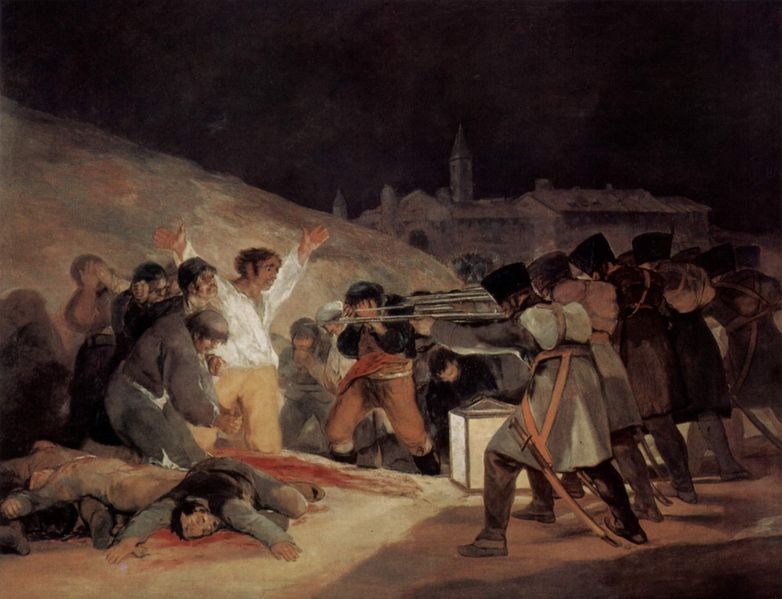
But I’m not a statistic. To me, their 80-90% is like lining up 10 people in front of a firing squad, then announcing cheerfully Excellent news! We’re only going to shoot 2 of you! How would you react?

As for protocols: I’ve been thinking a lot about standards recently. (You can download my writing on this at my website.) Standards and protocols are technopolitical settlements: temporary, rough agreements about how to understand something, or do something, or make something. 120V AC, TCP/IP, HDTV, FM, AM, QWERTY, HTML — all great things, important steps toward valuable infrastructure. All also things about which people fought; argued; won and lost colossal economic, intellectual, and personal struggles.

If standards and protocols settle controversies, ipso facto they help people stop thinking about something, at least until they’re forced to think about it again. In science and technology studies, we call this black-boxing. It's very valuable. The ability to stop thinking about complicated choices by putting them into a black box that cranks out a decision automatically — we need this to get by, in an ultra-complicated world, with our incredibly limited bandwidth (attention) and low-reliability, kilobyte-size memories.

Standards and protocols are especially useful for things you don’t encounter very much. Such as a rare disease with a pretty good treatment plan. The hematopathologist is very confident — but the ANXA1 test is nearly 100 percent accurate, if the research is to be believed. Which sounds better to you: very confident, or 100 percent accurate?

When Dr. A sees me on Monday morning, I’ll be packing a stack of article abstracts. And my question will be how much Dr. A is willing to learn — from me.